
Trading sessions are fixed periods when a market is open, whether for Forex, stocks, or commodities.
Specific sessions bring different market participants online — from Tokyo banks and exporters to London funds and New York financial institutions. Each wave of market players adds orders, news, and volume, which drives prices.
Volatility peaks in London and New York, especially when these two sessions overlap. Asia is usually quieter, with prices moving in a narrow range, often setting the stage for later sessions.
Why market sessions matter
•Volatility is not constant. Liquidity clusters in specific windows, and that’s when setups form.
•Market sessions shape volatility and drive price action in key pairs, such as EURUSD, GBPUSD, USDJPY, AUDUSD, and more.
•For every session, you can keep in mind the hours of the so-called kill zones — the time of increased volatility. If you look to open your trades on volatility, you will know the appropriate timing.

You can see the four major trading sessions: New York, London, Tokyo, and Sydney. Let’s talk about the specifics of every major session.
Asian session (Tokyo + Sydney)
Time: 22:00–07:00 Kill zone: 22:00–02:00
Volatile assets: USDJPY, AUDUSD, NZDUSD, NIKKEI
The Asian session is usually the calmest portion of a trading day. Prices move in a narrow range, building liquidity that later gets taken during the London and New York sessions.
How to trade
•Focus on structure, don’t chase big moves.
•Mark the range: Asian highs and lows often serve as reference points for your setups in subsequent sessions.
London session
Time: 07:00–16:00 Kill zone: 07:00–10:00
Volatile assets: EURUSD, GBPUSD, USDCHF
The market wakes up during the London session. Liquidity pours in, spreads tighten, and prices make their first decisive move of the day. In the first couple of hours, the market often sets the daily high or low, sweeping Asian liquidity before showing a direction.
How to trade
•Use Asian range levels as your reference points.
•Expect sharp volatility, especially immediately after the open.
•Watch the first hours: that’s when fake and real moves split.
•Many setups (liquidity grabs, imbalances, order blocks) form here and fuel New York.
New York session
Time: 12:00–21:00 Kill zone: 12:00–15:00
Volatile assets: EURUSD, GBPUSD, USDJPY, XAUUSD, US500, NASDAQ
London sets the trap, New York decides the outcome. This is where the day’s strongest and most profitable moves usually play out. The New York session is the powerhouse of a trading day when the largest volume and volatility hit the market. Most institutional flows and macroeconomic releases happen here.
How to trade
•Don’t rush in — wait for New York to show whether it continues or reverses London.
•This is the best time to catch strong intraday trends.
•Pay particular attention to gold and indices, which often dictate USD flow.
When should you trade?
In the classic model, Asia sets the range, London sweeps liquidity, and New York delivers the main move. However, the market doesn’t always follow this script, and sessions can swap roles. For example, sometimes London accumulates, leaving New York to trigger the stop-hunt and Asia to continue the trend the next day. Even normally calm Asian sessions can sometimes provide the strongest push.
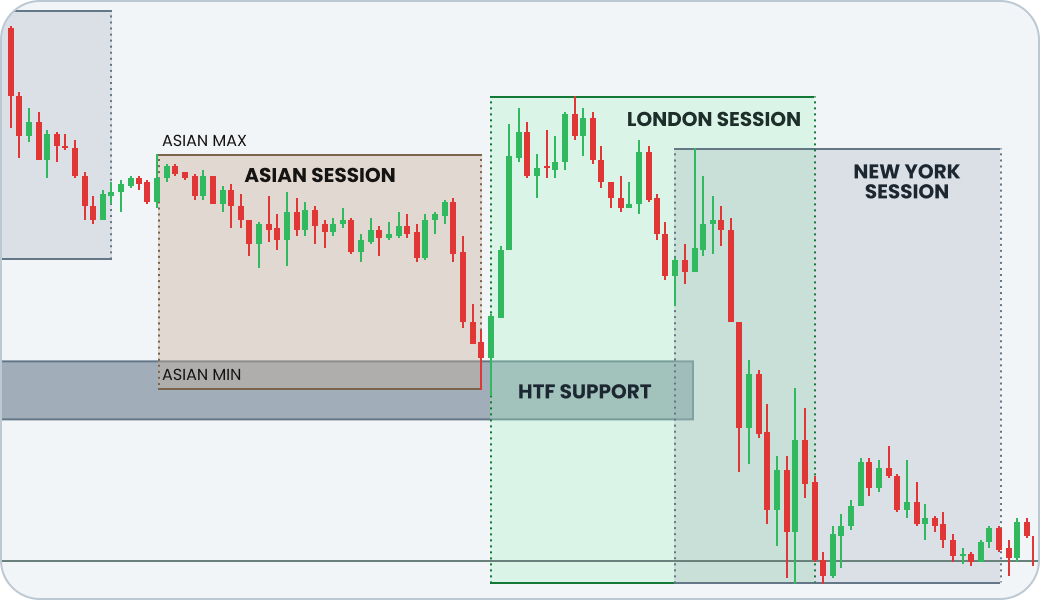
What matters is that you, as a trader, understand how the trading sessions work, when they overlap, and where to expect the strongest volatility. This understanding will help you recognize where liquidity is building and which session is driving it, and trade in sync with that flow.

These awards confirm our commitment to building a rewarding trading environment and helping you uncover your potential. Thank you for choosing to trade with an award-winning broker!
Choose MetaTrader 5 with Top Forex Brokers?
•Blazing-fast execution & enhanced stability
•38 built-in technical indicators & 21 timeframes for precision trading
•Optimized for all devices—desktop, mobile & web
•Trade a wide range of assets: Stocks, Commodities, Forex & more!
https://www.topforexbrokerscomparison.com
Disclaimer: These forex trading signals are for educational purposes only and not financial advice. Trading carries significant risks, including the potential loss of your entire investment. Always consult a professional advisor before jumping in.